|
||
|
|
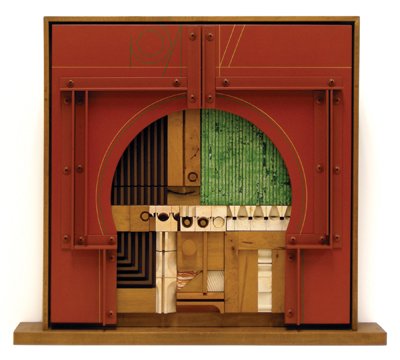
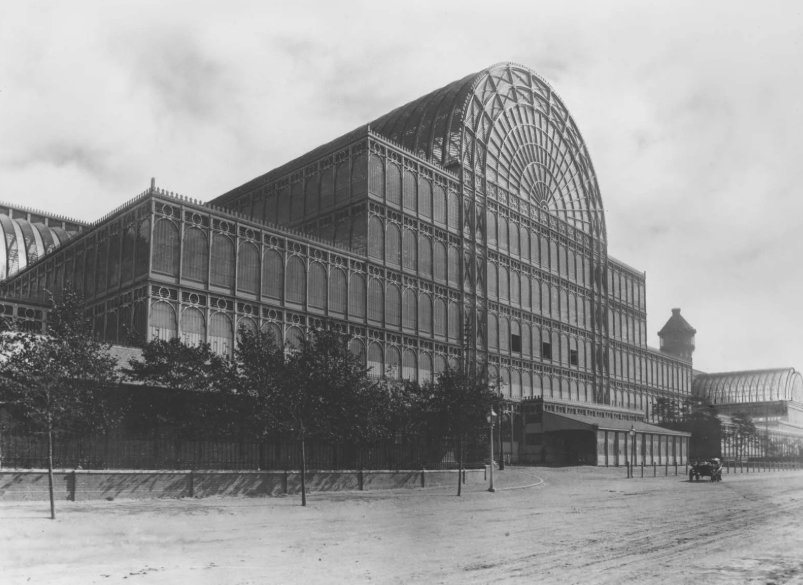
Assemblage is a technique that originated with Cubist collage and was first realized in sculpture by Picasso in 1912. This blend of sculpture and collage is highly suitable for the piano hammers and levers used in Krämer's Schumann illustrations. These modular wooden pieces, broken down and organized into groups, allow for a childlike, building-block playfulness in the creation of the works. Incorporated into the assemblages are sheets of foam-core board painted with acrylic using a dry-brush technique. These boards are cut and assembled with strong, visual, architectural elements; Romanesque portals are integrated into the master design of the vertical-horizontal axis. Underlying the forms, techniques, and designs of Krämer's works is the influence of contemporary assemblage artist Abe Ajay. Ajay explored variations of portal designs using painted boards and sculptured blocks. The portal designs in these pieces were also influenced by the shapes and style developed by Sir Joseph Paxton for his 1851 Crystal Palace in London. In keeping with Schumann's cohesive musical vignettes, common elements are used to achieve a similar unity across the assemblages. Consistency in color, size, material, and master design is maintained, with only slight variations to allow for individual characteristics. |
|
|
|
||