| Jack Coughlin Collection |
|
||||||
 |
 |
 | ||||
|
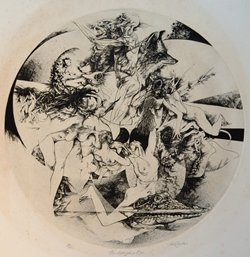
The Alligator's Eye Original etching, signed and numbered 23/75 Plate size: 18-inches diameter. (Round plate) Catalog #59 |
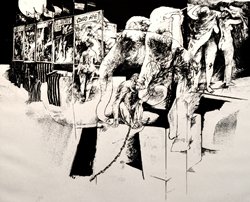
Traveling Circus Original etching, signed and numbered 35/60 Plate size: 17½-inches x 13½-inches. Catalog #56 |
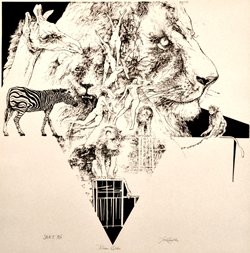
Dream Circus Original Lithograph, signed and numbered “State I” 4/17 Plate size: 12¾-inches x 12½-inches. Catalog #57 |
||||
 |
 |
 |
||||
|
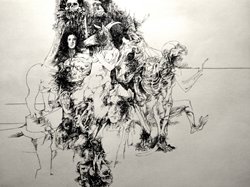
Alchemy of Memory Original etching, signed and numbered 14/50 Plate size: 23¾-inches x 18-inches. Catalog #58 |
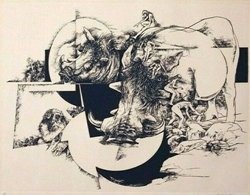
Untitled (Warthog) Original etching, signed and numbered 88/100 Plate size: 12¼-inches x 16¼-inches. Catalog #99 |
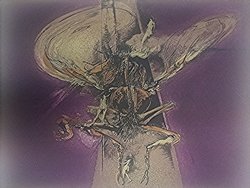
The Fly Original color etching, signed and numbered 62/100 Plate size: 12¼-inches x 16¼-inches. Catalog #98 | ||||
 |
 |
 | ||||
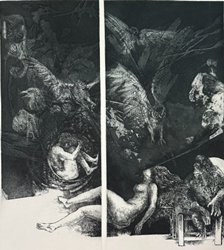
| No Eden Double plate original etching, signed and numbered 5/40 Left plate 6¾-inches x 18-inches. Right plate 9½-inches x 18-inches. Image size 15¾-inches x 18-inches Catalog #104 |
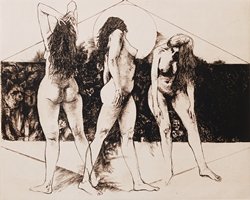
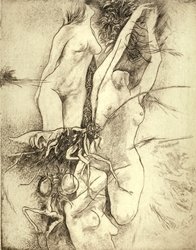
3 Figures Original etching, signed AP Plate size: 12-inches x 15¼-inches Catalog #107 |
Grasshopper (with three nudes) Original color engraving, 21/40 signed Plate size 6¼-inches x 8-inches Catalog #116 | ||||
| |